
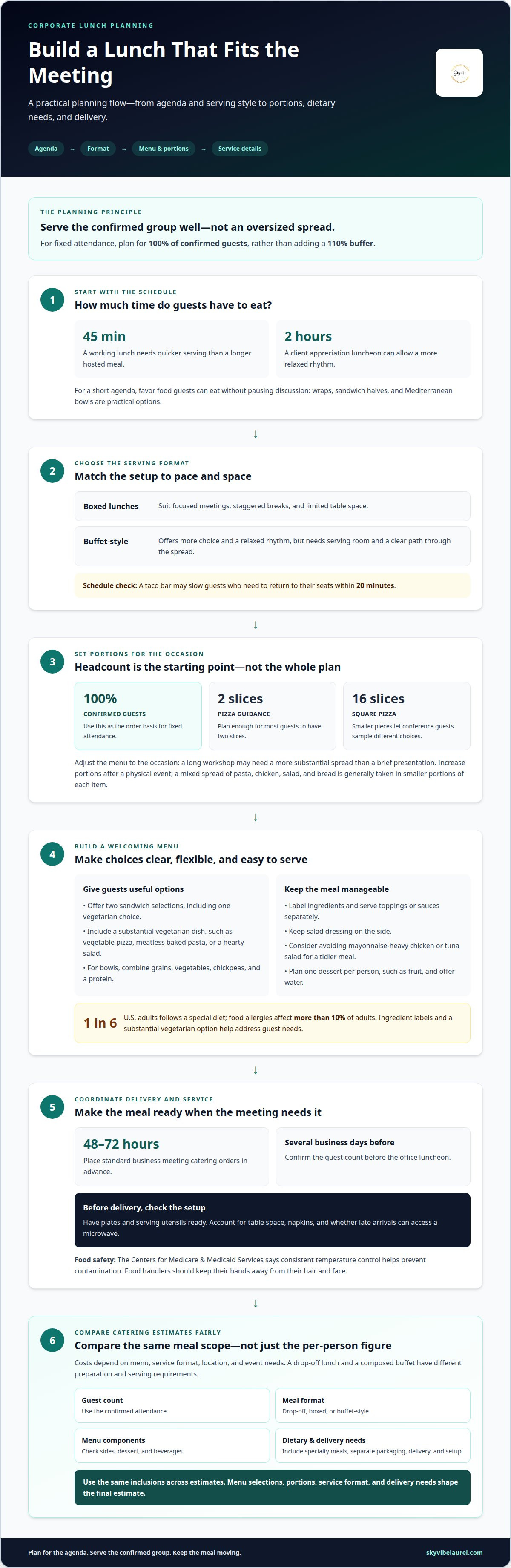
The safest corporate lunch order isn’t automatically the largest. For a fixed-attendance meeting, plan food for 100% of confirmed attendees rather than adding a 110% buffer. The best food for a corporate lunch meeting depends on the agenda, meal format, and time guests have to eat.
That balance matters: too little food can leave guests distracted, while an oversized spread may slow a working lunch and create leftovers. For pizza, plan enough for most guests to have two slices. With a mixed spread of pasta, chicken, salad, and bread, guests generally take smaller portions of each item.
Explore practical business lunch ideas, portion guidance for different catering formats, and ways to make the meal easier to serve and enjoy. Match the menu to the meeting’s schedule, confirmed headcount, and space for a spread that feels generous, stays manageable, and lets conversation keep its rhythm.
Key Takeaways
- Match the menu to the agenda: portable sandwiches suit staggered breaks, while a build-your-own spread works when guests have time to serve themselves.
- Plan for dietary needs with a substantial vegetarian choice, clear food labels, and beverage options that keep the meal comfortable and practical.
- Choose catering by considering the meeting’s pace, available table space, serving supplies, and whether late arrivals can access their food.
- Compare catering formats by what the menu and service include; the occasion, meal style, and level of presentation all shape the budget.
1. What are some business lunch ideas for a meeting?
Start with the agenda: a short working lunch needs food guests can eat without pausing the discussion. Wraps, sandwich halves, and Mediterranean bowls are practical because they’re easy to portion and less likely to drip. Build bowls with grains, vegetables, chickpeas, and a protein, then serve sauces and toppings separately. This gives guests flexible choices without creating a long buffet line.
For a composed sandwich lunch, offer two selections, including one vegetarian option. A seasonal salad and protein bar can offer two proteins and one warm accompaniment. A 16-slice square pizza gives conference guests smaller portions to sample different choices. Sandwich trays also suit sessions where attendees take breaks at different times. For a small winter meeting of six to 15 people lasting more than an hour, soup and sandwiches make a comforting spread.
Plan for dietary needs directly. Roughly 1 in 6 U.S. adults follows a special diet, and food allergies affect more than 10% of adults. Include a substantial vegetarian dish, label ingredients, and keep toppings separate. A vegetarian choice might be vegetable pizza, meatless baked pasta, or a hearty salad. For a tidier meal, avoid mayonnaise-heavy chicken or tuna salad. Serve one dessert per person, such as fruit, and offer water alongside the meal.
Keep service aligned with the schedule. Place standard business meeting catering orders 48 to 72 hours in advance, and confirm the guest count several business days before the office luncheon. For a meeting with a tight agenda, have plates and serving utensils ready before delivery. The best food for a corporate lunch meeting is easy to serve, satisfying, and suited to the time available.
2. How to choose catering for a corporate lunch meeting
Let the agenda set the format. A 45-minute working lunch needs quicker serving than a two-hour client appreciation luncheon. Boxed lunches suit focused meetings, staggered breaks, and limited table space. Buffet-style catering gives guests more choice and a relaxed rhythm, but needs room for serving and a clear path through the spread.
For guests returning to their seats within 20 minutes, a taco bar may slow the schedule. Choose portions that are easy to serve, and keep salads crisp by ordering dressing on the side. Plan for plates, utensils, napkins, and table space. If late arrivals need food, consider whether they can reach a microwave.
Match the quantity and menu to the occasion, not just the headcount. For fixed attendance, order for 100% of confirmed guests rather than adding a 110% buffer. A group of 12 at a short meeting may eat differently from the same group celebrating after work. Increase portions after a physical event or during a long workshop. Include dietary choices, such as chicken alongside a plant-based option.
Food safety matters during preparation, transport, and serving. The Centers for Medicare & Medicaid Services says consistent temperature control helps prevent contamination. It also advises food handlers to keep their hands away from their hair and face. These practices help keep a workplace meal safe and comfortable.
Consider timing, too: coffee may suit a morning session, while an afternoon meeting could call for lighter portions or chocolate as a small finish. For a hosted meal with thoughtful catering services, choose a format that fits the agenda, tables, and guests’ needs.
3. Average Cost Per Person for United States Catering
Corporate lunch catering costs depend on the menu, service format, location, and event needs. A boxed lunch and a composed buffet involve different preparation and serving requirements. A per-person estimate can also obscure what the order includes, such as sides, dessert, beverages, delivery, or setup. Compare the same inclusions when weighing catering options.
Match the meal to the agenda and guest experience. A simple drop-off lunch has different requirements from a client-facing meal with several courses. Consider the menu choices, balance of proteins and sides, and dietary accommodations. Specialty meals or separate packaging can affect the order’s scope, so include them when describing the event.
Headcount also shapes the total. For fixed attendance, order for 100% of confirmed guests rather than adding a 110% buffer. Then consider whether the meeting runs through lunch, includes a break, or follows a physical activity. A long workshop may call for a more substantial spread than a brief presentation. Avoid paying for extras that don’t serve the schedule or guests.
For a useful comparison, outline the guest count, meal format, menu components, dietary choices, and delivery needs together. Ask for the same scope across estimates, then review what each includes. The price depends on the event details and is provided after a quote request; menu selections, portions, service format, and delivery needs shape the estimate.
Ready to plan a catered gathering around your meeting’s menu and format? Request catering details for your event.
Skyvibe Restaurant and Lounge
Skyvibe Restaurant and Lounge offers Catering Services and Private Event Hosting for corporate meals in Maryland, Virginia, Delaware, and the District of Columbia. Turn to these services when the meeting calls for a hosted gathering or a menu with a distinctive Afro-Fusion character. Nigerian-inspired dishes include Oye’s Red Snapper, Egusi Soup, and Pounded Yam, bringing bold flavors and cultural heritage to the table.
For a lunch meeting, the menu should support the gathering’s purpose, guest needs, and serving format. A hosted event can make sense when conversation and hospitality matter as much as the agenda. Shape the meal around the occasion, from a focused team gathering to a client luncheon, and let the food set a warm, memorable tone.
Contact Skyvibe Restaurant and Lounge to discuss your corporate gathering.
Make Your Next Lunch a Moment to Connect
A well-planned meal gives colleagues room to connect, share ideas, and return to the agenda with fresh energy. Let the best food for a corporate lunch meeting reflect the gathering’s purpose. Choose a menu and serving style that complement the conversation rather than compete with it.
As you plan your next event, bring the agenda, expected attendance, dietary needs, and preferred meal format into the conversation. Those details help shape a catering plan, whether it’s a focused team session or a celebratory occasion. A thoughtful meal can turn a calendar commitment into a warm, shared experience.
Contact Skyvibe Restaurant and Lounge to talk about catering for your gathering. Make the next lunch one your team looks forward to.
Frequently Asked Questions
How Much Food Should You Order?
Let the schedule and other food available guide the order. For a midafternoon meeting where snacks are already provided, scale back the catered food slightly. An all-day training can use separate breaks for a light snack, lunch, and another snack instead of treating each pause as a full meal. This keeps portions aligned with the day’s rhythm.
What Makes Office Catering Actually Work?
Good timing keeps the meal in step with the meeting. For an all-day session, plan a food reset at 10:30, lunch at 12:15, and an afternoon snack at 3 p.m. Teams meeting in Maryland, Virginia, Delaware, or the District of Columbia can use this rhythm to keep breaks predictable and the agenda moving.
What are some business lunch ideas for a meeting?
A taco bar offers a lively build-your-own option when the agenda allows time for serving. Set out whole-grain tortillas, shredded chicken, vegetables, black beans, salsa, and shredded low-fat cheese. Guests can assemble their own combinations, making the meal feel varied without requiring a separate entrée for every preference.
What are some lunch-and-learn menu ideas?
Pair a short presentation with a tidy boxed lunch, so guests can eat without leaving the session. For an employee hobby showcase, a staff member can introduce a personal passion in 30 minutes while attendees enjoy fruit cups and baked chips. Keep the meal simple enough that opening packages doesn’t compete with listening.
What foods are best for a corporate lunch meeting?
Choose filling food that suits the meeting’s pace and can be combined into a balanced spread. Wings work best alongside other dishes rather than as the only meal for a hungry group. If fried appetizers are on the menu, serve them soon after delivery; they lose crispness as they sit.


